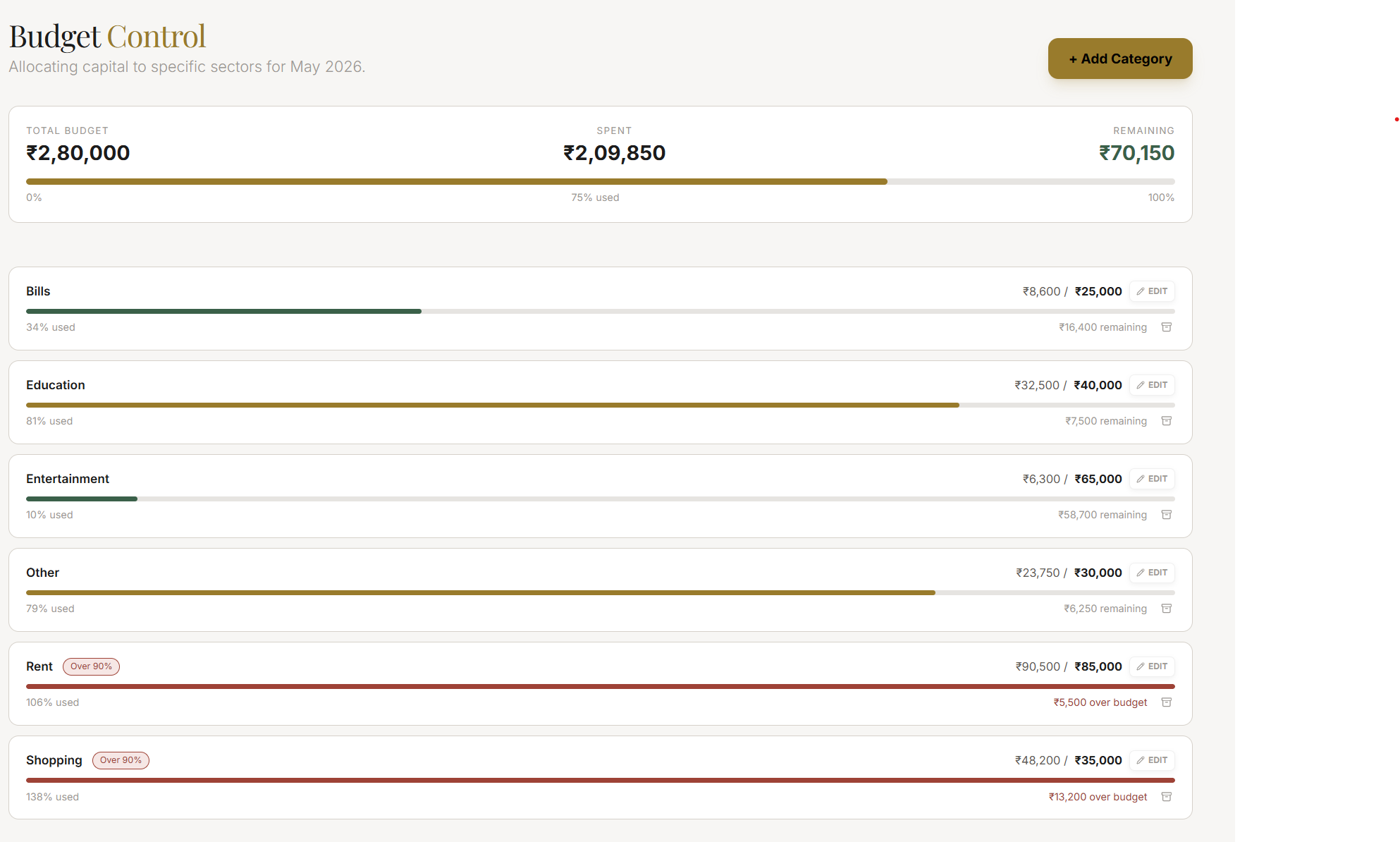
How to Use Zero-Based Budgeting
Allocate every dollar a specific job before the month begins to prevent lifestyle creep and ensure intentional spending.
How to Use Zero-Based Budgeting
Operational Directive

The philosophy of zero-based budgeting is rooted in absolute financial accountability and total control.
Unlike traditional methodologies that rely on passive tracking or arbitrary percentages, this system demands ultimate precision.
Every single unit of currency you earn must be assigned a specific, defined purpose before the spending cycle begins.
The equation is absolute and unforgiving: Income minus Expenditures must equal exactly zero.
If there is money left over, it has not been given a job, making it highly vulnerable to impulsive, untracked expenditure.
This is where most wealth accumulation plans fail spectacularly.
When you implement this methodology within the JeevanAxis framework, you shift your financial operating model entirely.
You move from reactive forensics to proactive resource allocation.
You stop asking "where did my money go?" and begin commanding your money on exactly where to go.
This shift is critical for preventing lifestyle creep, the silent disease of personal finance.
Lifestyle creep is the phenomenon where increased income is immediately absorbed by increased discretionary spending.
Zero-based budgeting halts this mechanism by forcing intentionality at every marginal dollar.
To execute this successfully, you must view your monthly income as a fixed, finite pool of resources.
This pool must be entirely deployed across three primary vectors.
These vectors are fixed costs, variable costs, and future positioning.
There is no slush fund. There is no unaccounted pool.
Every dollar must have a name, a target, and a strict deployment schedule.
The architecture of proactive allocation requires rigorous discipline.
It requires an uncompromising commitment to your long-term financial objectives.
Without this commitment, the system degrades into mere observation.
Section ProtocolThe Architecture of Proactive Allocation
Allocation must occur before the month begins, never after.
You cannot intelligently allocate funds you have already spent.
This requires forecasting your incoming cash flow and meticulously distributing it.
If your income fluctuates, you must base your allocations on a conservative baseline.
Never budget based on the best-case scenario.
- ▶Define the Resource Pool: Calculate the total usable income expected for the upcoming cycle.
- ▶Fund the Critical Infrastructure: Allocate funds to non-negotiable fixed costs first.
- ▶Fund the Future: Allocate to investments and savings before addressing variable spending.
- ▶Fund Operations: Distribute the remaining capital across variable categories.
- ▶Achieve Absolute Zero: Adjust the allocations until the remaining unallocated balance is exactly zero.
Section ProtocolHandling Overspending and Variance
No forecast survives reality without encountering variance.
You will inevitably overspend in specific categories at some point.
This happens due to unforeseen circumstances, price fluctuations, or momentary lapses in discipline.
In a zero-based system, overspending in one category does not mean you have failed.
It means you must recalibrate immediately and face the reality of the math.
Because your total allocation is zero, covering an overspend requires moving funds from another category.
This is known as rolling with the punches.
It forces a real-time prioritization decision that you cannot escape.
If you overspend on dining out, you must defund another variable category.
Perhaps you pull from entertainment or clothing to restore balance.
This restores equilibrium to the system without injecting new, unbacked capital.
The mechanism for this involves executing category transfers.
You manually reduce the allocated amount in a surplus category and increase the deficit category.
If an overspend cannot be covered by variable categories, you must pull from short-term savings.
This is a painful operation designed to enforce discipline.
It highlights the direct consequence of the overspend on your future security.
Section ProtocolRolling Over Balances: The Carry-Forward Mechanism
At the end of a cycle, you will likely have categories with positive balances.
These are unspent funds that were allocated but not deployed.
How you handle these balances defines your long-term capital accumulation strategy.
You have two clinical options for handling these positive category balances.
The first is The Sweep.
You extract all positive balances and reassign them to a central accumulation category.
This resets all variable categories to zero for the next month, enforcing strict constraints.
The second is The Accumulator.
You allow the balance to roll over into the next month for that specific category.
This is extremely useful for sinking funds, such as accumulating funds for a yearly insurance premium.
Section ProtocolThe Psychological Mechanics of Scarcity
The true power of this methodology lies in its psychological impact on the operator.
By forcing a zero-sum environment, the system induces artificial scarcity.
This scarcity heightens the perceived value of each dollar deployed.
You are no longer spending abstract numbers from a seemingly infinite pool.
You are trading off specific future utilities for present consumption.
If you buy a luxury item, the system visually forces you to reduce your travel fund.
This immediate, visceral feedback loop corrects behavioral anomalies over time.
It rewires your brain to value delayed gratification over instant dopamine.
⚠Common Traps
✓Integration Checklist
Reflection Prompts
Executive Summary
▸Zero-based budgeting is the ultimate mechanism for establishing financial control.
▸By mandating that every dollar is assigned a specific job before the month begins, you eliminate the ambiguity that leads to lifestyle creep and impulsive spending.
▸The system requires proactive forecasting, ruthless prioritization during overspending events, and strategic handling of rollover balances.
▸It transforms passive tracking into active capital deployment, ensuring your financial resources are precisely aligned with your strategic objectives.
Intelligence Pipeline
Set Up Your Categories →
Navigate to the category configuration panel and establish your structures for the upcoming month.
Allocate Next Month Income →
Begin assigning your expected income until the unallocated balance hits absolute zero.
Review Recurring Bills →
Ensure all fixed overhead costs are accurately represented in your projections.
Connected Intelligence
Ready to Deploy Your Life OS?
Experience the full power of integrated intelligence. Stop managing apps and start operating your life.
Launch Command Center